Showing posts with label whales. Show all posts

Basilosaurus

Basilosaurus

untitled.png
Basilosaurus is thought to be lived between 40 million years ago in Eocene.
The fossils were initially believed to be reptile, hence the suffix -"saurus", Greek for ‘king lizard,’, but later found to be a marine mammal.
 “Basilosaurus existed at a time when baleen-bearing mysticetes [modern baleen whales] are known to have existed, and echolocating odontocetes [toothed whales] are presumed to have existed,” whale evolution expert Dr. Lawrence Barnes of the Natural History Museum of Los Angeles, quoted in Evolution: The Grand Experiment by Dr. Carl Werner, page 144. New Leaf Press, 2007


Size compared to a human.


There is unparalleled degree of elongation compared with modern whales. The Basilosaurus is 18 meters (60 feet) long (10 times as long as Ambulocetus) with 0.6 meter (2 ft) hind limbs. They were probably used to clasping during copulation.
Gingerich said,
It seems to me that they could only have been some kind of sexual and reproductive clasper.’ Gingerich, P. D., B. H. Smith, and E. L. Simons. 1990. Hind limbs of Eocene Basilosaurus isis: evidence of feet in whales. Science, 249: 154-157

Barbara Stahl, a vertebrate paleontologist and evolutionist, points out:
"The serpentine form of the body and the peculiar shape of the cheek teeth make it plain that these archaeocetes [like Basilosaurus] could not possibly have been the ancestor of modern whales."

The jawbone of an ancient whale found in Antarctica may be the oldest fully aquatic whale yet discovered.

10/11/2011
This jawbone, in contrast, belongs to the Basilosauridae group of fully aquatic whales, said Reguero, who leads research for the Argentine
Antarctic Institute.With this new fossil find, however, dating to 49 million years ago (bear in mind that Pakicetus lived around 53 million years ago), this means that the first fully aquatic whales now date to around the time when the alleged walking whales (Ambulocetus) first appear.

www.nbcnews.com/id/44867222/ns/technology_and_science-science/

Rodhocetus

Rodhocetus
 rhodocetus.jpg
A fossil of a creature called Rodhocetus, mammal that lived in the sea and now extinct, is portrayed as the first creature with legs changing into flippers and with the tail developing into a whale’s tail. Without it there is really no story, but recent disclosures undo the tale.
Two species were identified ( Rhodocetus kasrani in 1978 by paleontologist Gingerich. Rhodocetus balochensis by Philip Gingerich in 2001.
The date set for the Rhodocetus is about 49 - 39 million years ago, in the middle Eocene
Basilosaurus_tail.jpg
Dr Gingerich, who found the fossil, promoted the idea that Rodhocetus had a whale’s tail.
Carl Werner noted that the part that would show the presence of the flukes (the rear wings) is missing. He asked about the missing tail bones and how they knew it had tail flukes. Dr Gingerich replied,
"I speculated that it might have had a fluke, I now doubt that Rodhocetus would have had a fluked tail."
200px-532px-Rodhocetus_sp_pelvis_hind_li
magnify-clip.png
Pelvis, hind limb, and the vertebrae Rodhocetus sp. on Field Museum of Natural History.

    Dr Werner noted on inspecting the fossil of Rodhocetus the absence of any flipper bones. When he asked Dr Gingerich how he knew that the animal had flippers, Dr Gingerich said,
    “Since then we have found the forelimbs, the hands, and the front arms of Rodhocetus, and we understand that it doesn’t have the kind of arms that can spread out like flippers on a whale.

Ambulocetus natans

Ambulocetus natans
It lived about 50 million years ago, during the early Eocene.The specimen was found in eastern Pakistan by Thewissen et al,(Northeastern Ohio University College of Medicine), who popularized the idea that this creature was an early, amphibious ancestor of whales. It is actually a land creature that evolutionists have insisted on ‘turning into a whale.’
ambulocetus.png

The name Ambulocetus natans comes from the Latin words ‘ambulare’ (to walk), ‘cetus’ (whale) and ‘natans’ (swimming), and means ‘a walking and swimming whale.’
It is obvious the animal used to walk because it had four legs, like all other mammals, and even wide claws on its feet and hooves on its hind legs.  Apart from evolutionists’ prejudice however, there is absolutely no basis for the claim that it swam in water, or that it lived on land and in water (like an amphibian).
In order to see the border between science and wishful imagination on this subject, let us have a look at National Geographic’s reconstruction of Ambulocetus.  This is how it is portrayed in the magazine:
ng_whales0104.jpg

Fake drawings:  Imaginary webs added to claws, and rear legs made to look like fins.
If you look at it carefully you can easily see the two little visual manipulations that have been employed to ‘turn the land-dwelling Ambulocetus into a whale:
  • The animal’s rear legs are shown not with feet that would help it to walk, but as fins that would assist it to swim.  However, Carroll, who examines the animal’s leg bones, says that it possessed the ability to move powerfully on land.[5]
  • In order to present an impression of adaptation for water, webbing has been drawn on its front feet.  Yet it is impossible to draw any such conclusion from a study of Ambulocetus fossils.  In the fossil record it is next to impossible to find soft tissues such as these.  So reconstructions based on features beyond those of the
    skeleton are always speculative.  That offers evolutionists a wide-ranging empty space of speculation to use their propaganda tools.
With the same kind of evolutionists touching up that has been applied to the Ambulocetus drawing, it is possible to make any animal look like any other.  You could even take a monkey skeleton, draw fins on its back and webbing between its fingers and present it as the ‘primate ancestor of whales.’

In publishing the picture of the animal’s skeleton, National Geographic had to take a step back from the retouching it had carried out to the reconstruction picture which made it seem more like a whale.  As the skeleton clearly shows, the animal’s feet were designed to carry it on land.  There was no sign of the imaginary webs.

whale5a.jpg


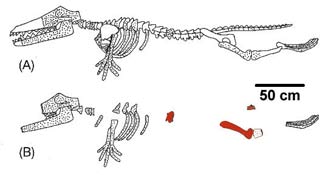
(A) Imaginary drawing of Ambulocetus, ‘at the end of the power stroke during swimming’, by Thewissen et al.

(B) The stippled bones were all that were found. And the bones coloured red were found 5 m above the rest. With the ‘additions’ removed there really isn’t much left of Ambulocetus!
The evolutionary biologist Annalisa Berta commented on the Ambulocetus fossil (in 1994):

'Since the pelvic girdle is not preserved, there is no direct evidence in Ambulocetus
for a connection between the hind limbs and the axial skeleton. This hinders interpretations
of locomotion in this animal
, since many of the muscles that support and move the hindlimb originate on the pelvis
'

220px-Ambulocetus_SIZE.png
Imaginary drawing-Ambulocetus size, compared to a human.
In 1996, More remains were found:

The shock:
1776Ambulocetus-natans.jpg

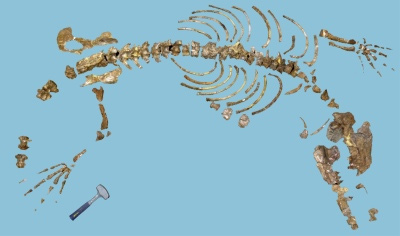
Figure : All the material found of Ambulocetus natans (from: http://www.neomed.ed...gins/index.html)- The ONLY known fossil in the world - This animal is known solely from a single, partial skeleton, that of an individual about 3 meters (~10 feet) long!

EUGENE M. MCCARTHY, PHD commented:

The actual evidence for such a claim is actually rather meager. Here are the few points usually cited in support of this assertion:

 
  • It is supposedly whalelike because it had a nose that allowed it to swallow underwater.
  1. However, human beings and many other non-marine organisms can swallow underwater.
  2. Moreover, as can be seen figure above , the snout of the single known specimen was not preserved.
  • The periotic bone, which surrounds the inner ear in mammals, is
    supposedly whalelike, allowing ambulocetids to hear well in water.
  1. But no one actually knows how well these creatures could hear, whether in water or out of it.
  2. Moreover, little or nothing is usually said about the great dissimilarity between all of the other features of this animal and those of a whale.
  • Its teeth are alleged to be like those of a whale.
  1. But the jaws of the single individual known (again see the figure above) are highly fragmented, and the few teeth preserved appear to differentiated, unlike those of toothed whales.
  • It is asserted that Ambulocetus's hindlimbs were ill-adapted to terrestrial locomotion. But the limbs — and the pelvis — are so poorly preserved (see high resolution image), that it seems there is no clear evidence bearing on this point.
  • Known fossils are from the Eocene and are already quite whalelike. Ambulocetus
    (Thewissen and Aria 1994; Thewissen et al. 1996) cannot be counted as a transitional form because it is actually younger than the oldest rcognized cetacean Himalayacetus (Bajpa and Gingerich 1998). The evolution of whales from forms that are younger than the earliest known whales clearly isn't possible.
www.macroevolution.net/ambulocetus.html

The jawbone of an ancient whale found in Antarctica may be the oldest fully aquatic whale yet discovered.
10/11/2011
With this new fossil find, however, dating to 49 million years ago (bear in mind that Pakicetus lived around 53 million years ago), this means that the first fully aquatic whales now date to around the time when walking whales (Ambulocetus) first appear.
www.nbcnews.com/id/44867222/ns/technology_and_science-science/

N.B:

Wikipedia is unreliable source for any information related to evolution.


Related topics:

Basilosaurus

Rodhocetus

Pakicetus

Indohyus

Pakicetus

Pakicetus
A Quadrupedal Forced to be the ‘Ancestor of the Whale’
pakicetus.png

In 1983.  P. D. Gingerich and his assistants, who found the fossil, had no hesitation in immediately claiming that it was a ‘primitive whale,’ even though they actually only found a skull.
Its skeleton turned out to be similar to that of common wolves.  It was found in a region full of iron ore, and containing fossils of such terrestrial creatures as snails, tortoises or crocodiles.  In other words, it was part of a land stratum, not an aquatic one.
So, why was a quadrupedal land dweller announced to be a ‘primitive whale’? 
'Subtle clues in combination—the arrangement of cups on the molar teeth, a folding in a bone of the middle ear, and the positioning of the ear bones within the skull—are absent in other land mammals but a signature of later Eocene whales.'
In other words, based on some details in its teeth and ear bones, some persons felt able to describe this quadrupedal, wolf-like land dweller as a ‘walking whale.’  Just one look at the reconstruction of Pakicetus by the evolutionist illustrator will reveal the absurdity in terming it a ‘walking whale.’

Even Gingerich himself admitted:
'But we do know that its hearing mechanism was that of a land mammal and that it was found in fluvial sediments with other land animals'
Distortions in The Reconstructions :
ng_whales0101.jpg

ng_whales0102.jpg


(Paleontologists believe that Pakicetus was a quadrupedal mammal.  The skeletal structure on the left, published in the Nature magazine clearly demonstrates this.  Thus the drawing of Pakicetus by Carl Buell, which was based on that structure, is somewhat realistic.)

ng_whales0103.jpg(Pakicetus reconstruction by National Geographic  
The animal has been portrayed in a ‘swimming’ position.  Its hind legs are shown stretching out backwards, and an impression of ‘fins’ has been given.)
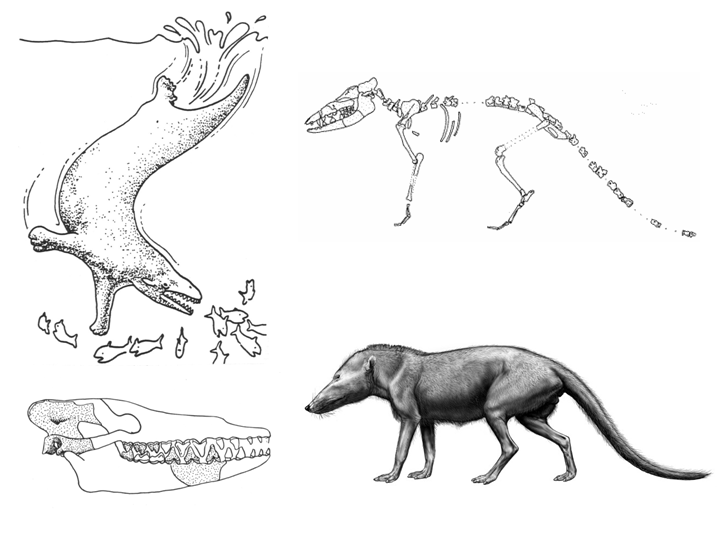
pakicetus.gif
Top left: Gingerich’s first reconstruction
Bottom left: what he had actually found
Top right: more complete skeleton (remaines claimed to be found later)
Bottom right: more reasonable reconstruction

'illustration shows the skulls of two pakicetids (Ichthyolestes and Pakicetus) are comparable to that of a modern coyote (Canis latrans). Saying that the evolution of whales started with this doglike animal is sheer nonsense' (EUGENE M. MCCARTHY, PHD on evolution of whales)
The features of the details are no compelling evidence on which to base a link between Pakicetus and the whale:
  •  some of these features are actually found in other terrestrial animals as well.
  • None of the features in question are any evidence of an evolutionary relationship.  Even evolutionists admit that most of the theoretical relationships built on the basis of anatomical similarities between animals are completely untrustworthy.
    Quote
    If the marsupial Tasmanian wolf and the common placental wolf had both been extinct for a long time, then it is no doubt that evolutionists would picture them in the same taxon and define them as very close relatives.  However, we know that these two different animals, although strikingly similar in their anatomy, are very far from each other in the supposed evolutionary  tree of life.  (In fact their similarity indicates common design—not common descent.)
    The mole has a bird-like sternum and wrist bones, but it would be absurd to conclude that birds evolved from moles! Many more examples can be found here: Similarities and Homology: No Evidence For Evolution!
Pakicetus, was a unique species harboring different features in its body.
In fact, Carroll, an authority on vertebrate paleontology, describes the Mesonychid family, of which Pakicetus should be a member, as “exhibiting an odd combination of characters.”[3]
As paleontologist Robert L. Carroll (1997: 329) notes,

'It is not possible to identify a sequence of mesonychids leading directly to whales, although some teeth now recognized as belonging to primitive whales were originally described as from mesonychids. All adequately known mesonychids were terrestrial in most aspects of the skeleton, and some show specializations for cursorial [i.e., running] locomotion.'
Such prominent evolutionists as Gould accept that ‘mosaic creatures’ of this type cannot be considered as transitional forms.

 In his article ‘The Overselling of Whale Evolution,’ Ashby L. Camp wrote:

 “The reason evolutionists are confident that mesonychids gave rise to archaeocetes, despite the inability to identify any species in the actual lineage, is that known mesonychids and archaeocetes have some similarities.  These similarities, however, are not sufficient to make the case for ancestry, especially in light of the vast differences.  The subjective nature of such comparisons is evident from the fact so many groups of mammals and even reptiles have been suggested as ancestral to whales.”[4]

G.A. Mchedlidze, a Russian expert on whales, has expressed serious doubts as to whether creatures like Pakicetus and Ambulocetus, and others—even if accepted as aquatic mammals—can properly be considered ancestors of modern whales. He sees them instead as 'a completely isolated group.'
‘All the postcranial bones indicate that pakicetids were land mammals, and … indicate that the animals were runners, with only their feet touching the ground.’ This is very different from Gingerich’s picture of an aquatic animal! But the evolutionary bias is still clear, describing Pakicetus as a ‘terrestrial cetacean’ and saying, ‘The first whales were fully terrestrial, and were even efficient runners.’ But the term ‘whale’ becomes meaningless if it can describe land mammals, and it provides no insight into how true marine whales supposedly evolved.
http://harunyahya.com/en/works/3378
5-whale evolution

Summary:
http://youtu.be/2nS-RifoPFA?t=9s

Indohyus

Indohyus
A report published December, 2007, outlined a description of a new fossil discovery claimed by Dr. J. Thewissen and his colleagues to represent the ancestor of the whale/cetaceans. This went viral.

whales_wiki.png
indohyus.png
dn13110-1_250.jpg(Imaginary drawings)

220px-Indohyus_BW.jpg

The reason why evolutionists cling to Indohyus as a missing link is that:
1- they depict a structure between the middle and inner ear (tympanic bullae, involucrum  extra "wall") as similar to that in marine mammals.
2- they claim that Indohyus' teeth have a similar structure to those of marine mammals
3- eyes being higher in the skull than is the case in other ungulates,and  this is a feature shared with whales. 


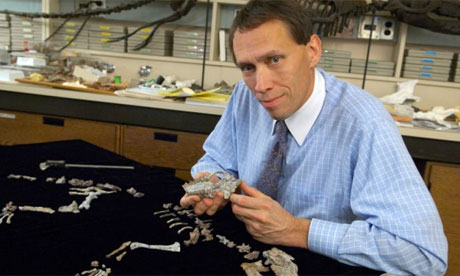
(Magnified, actual bones in the link below:
http://static.guim.c...-indohyus-1.jpg
However, the idea of the evolution of the whale, a fantastical and unscientific fairy tale, is incompatible with the emergence of Indohyus. Let us now examine these inconsistencies.

a) Indohyus is a finding that rocks the idea of whale evolution, and the idea that it supports it is a total deception.
According to the classic scenario of whale evolution, mammals dwelling on the land are considered to have moved into the water. The fact is, however, that an examination of Indohyus shows that it already lived in water (teeth 18O values and osteosclerotic bones- Virtually all aquatic vertebrates have it ), and its dental structure shows that it lived a herbivorous existence. This feature of Indohyus represents a major contradiction of those evolutionists who say, in their classical accounts, that terrestrial mammals moved into the sea in order to find prey.
The New Scientist article said this on the subject:

 The research also challenges the idea that cetaceans – the order that includes whales, dolphins, and porpoises – split from their land-dwelling forebears and returned to the water to hunt aquatic prey.

This suggests that Indohyus was a shallow water wader already, and had not returned to the water simply to hunt live prey.
Whenever they are confronted by findings that clash with their own fairy tales they attempt to save their theories by means of such trickery as saying “evolution happened in this way, rather than that,” when what they should say is; “our accounts are wrong, there is no foundation to what we have been describing as the true facts in school text books.”

b) The similarities constructed between Indohyus and whales are not restricted to these life forms alone.
The similarities they have come up with between the two can also be seen in other mammals which have no connection at all to whales in respect of the theory of evolution. Scientists make the following admission on the subject:

None of these features characterize all modern and extinct cetaceans [whales—KB].... In addition, all of these characters are found in some mammals unrelated to cetaceans(Thewissen, et al., 2007)

As we have seen, Indohyus shares anatomical features not just with whales, but also with other mammals which are totally incompatible with whales in terms of the myth of evolution. For that reason, the depiction of Indohyus as “the missing link in whale evolution” in New Scientist magazine is devoid of any scientific justification.

indohyus_f.jpg
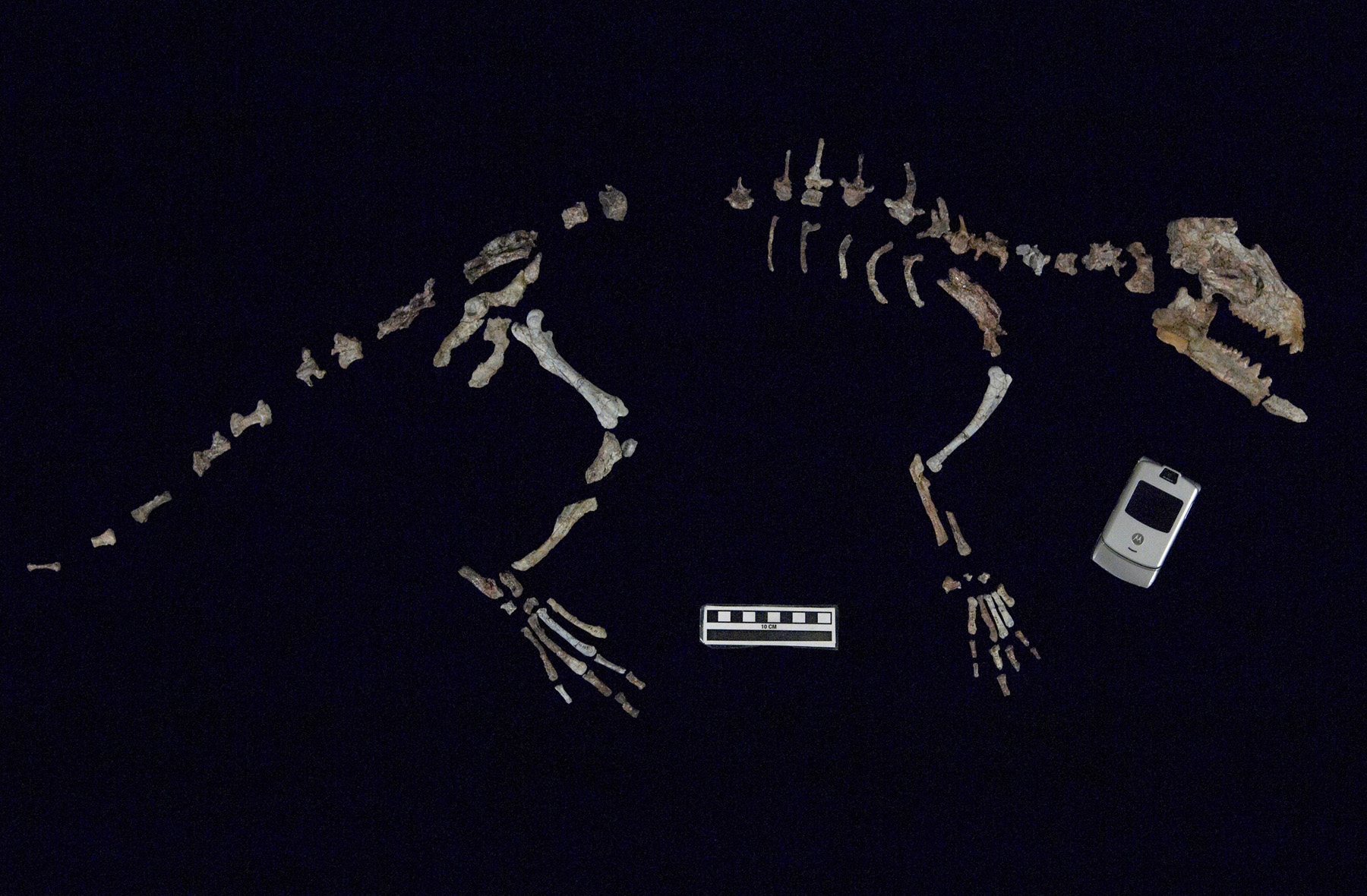
'The 48-million-year-old actual skeleton of Indohyus spent much of its life in water.
The cell phone is for size comparison .
'


Quote
What does Indohyus actually prove? It proves that the alleged closest relative of the whale can change from the hippopotamus to a small deer-like creature in the blink of an eye, based on certain similar structures that it has in common with other mammals besides whales.
The DNA of whales is most like the DNA of hippos. Therefore, the molecular biologists say whales must have evolved from an early hippopotamus.
Paleontologists don’t buy that argument because they think the oldest whale fossils are 50 million years old, and the oldest hippo fossils are just 15 million years old. If whales preceded hippos by 35 million years, they could not have evolved from them. But the fossil record has “not resolved the issue of cetacean relations” either. So, there are several different proposed whale ancestors.

c) The similarity constructed between Indohyus and whales on the basis of dental structure is also questionable

Those making these claims about Indohyus also suggest that it shares a common dental structure with whales. However, whales are carnivores. Indohyus, on the other hand, was a herbivore, with totally different feeding patterns.
F4C3A0DD-DE25-9608-7616C4B09B24DA94_1.jp
http://www.scientifi...09B24DA94_1.jpg
They said
"All fossil and recent cetaceans differ from most other mammals in the reduction of crushing basins on their teeth: there are no trigonid and talonid basins in the lower molars, and the trigon basin of the upper molars is very small (for example in pakicetids and ambulocetids) or absent. Crushing basins are large in raoellids -indohyus- and other basal ungulates. This implies that a major change in dental function occurred at the origin of cetaceans, probably related to dietary change at the origin"(Thewissen, et al., Nature)

What they are basically saying is that Indohyus must have been a whale ancestor because its teeth are NOT whale-like, which is proof that the shape of whale teeth evolved!

Additionally, ScienceNOW, a daily news feature of the journal Science, notes that "cetaceans are so different from any other creature that researchers haven’t been able to agree which fossil relatives best represent their nearest ancestors."
Conclusion:

Since evolutionists adopt their theories as a dogma right from the outset, and since evolutionary development is a belief imposed by materialist ideology, they are quite capable of manufacturing huge flights of fancy based on the very smallest similarities. The way they regard Indohyus, an animal that lived in rivers and no larger than a racoon (compared to the small swimming mouse deer), as the ancestor of the whales, on the basis of superficial similarities, such as Indohyus' eye sockets being located a little higher, represents a striking and dazzling example of this dogmatic and fantastical mindset. 


Any normal, rational individual whose thought processes are unfettered by materialist preconceptions will know that this design can only be possible as the result of a mind having planned it. In the same way that the existence of a computer points to the existence of a computer engineer, or a building to that of an architect, so the sublime complexity and vast quantities of information in the biological systems in living things indicate the existence of the Creator who brought them into being. It is quite certain that this Creator is Almighty God, Who has no need of blueprints or designs in order to create, and Who brings all things into existence merely by commanding them to “Be!”
http://www.darwinism...akale_id=148106
http://www.ridgenet....sage/v12i4n.htm

Darwin & National Geographic on whales evolution !

Whales cause big problems for some persons, because they say that all mammals evolved on land and then moved into the ocean, after they evolved the special features required for underwater life.
They point out that some whales have tiny “legs” that were supposedly once used for walking, but are of no use anymore.

Brownbear-large.jpg
Darwin's writings about the origins of the whale show that the idea that they evolved is based entirely on fantasy and preconception (Just for fun):

"I can see no difficulty in a race of bears being rendered, by natural selection, more aquatic in their structure and habits, with larger and larger mouths, till a creature was produced as monstrous as a whale,"
Human compared to whales

But Darwin produced no concrete evidence in favour of this claim, and the idea that whales evolved from land-dwelling terrestrial mammals has remained a fairy tale.

The tale of “the evolution the whale” by National Geographic magazine:

''The Whale's ascendancy to sovereign size apparently began sixty million years ago when hairy, four-legged mammals, in search of food or sanctuary, ventured into water. As eons passed, changes slowly occurred.
Hind legs disappeared, front legs changed into flippers, hair gave way to a thick smooth blanket of blubber, nostrils moved to the top of the head, the tail broadened into flukes, and in the buoyant water world the body became enormous !!!.''


In those terms, the above account is no different to the fairy tale of the frog turning into a prince

Whale evolution