Pseudogenes & Junk DNA


Pseudogenes have been defined as nonfunctional sequences of genomic DNA originally derived from functional genes. Pseudogenes have long been labeled by Darwinists as “junk” DNA, failed copies of genes that arise during the evolution of genomes.
dna1.jpg
But, pseudogenes that have been suitably investigated often exhibit functional roles, such as gene expression, gene regulation, generation of genetic (antibody, antigenic, and other) diversity. Pseudogenes are involved in gene conversion or recombination with functional genes.

Can the so-called "Vestigial Organs" Be A Proof Of Neo-Darwinism ?

A vestigial organ, by evolutionary definition, is an organ that was once useful during a previous stage of your evolution for a supposed ancestor, but in the course of time, that organ was no longer needed, but continued to remain in the body.

Analysis:


1- Devolution Not evolution !

If vestgial organs would prove anything, they prove devolution, NOT evolution !
Darwinists claim that some of our organs are falling into disuse. Yet, in contrast, they provide us with no one NEW, developing organ. The "vestigial organs" idea, if it could be true, would only prove the opposite: devolution!

2- Not for survival ! 

Not all organs are necessary for survival,this doesn't mean they are useless!
You have 2 lungs, you need one to survive. You have 2 kidneys, you need 1/10 for survival. No one claimed the other lung may be 'just for fun'.
you will survive if your eyes and arms are cut out, and they are not "vestigial," or useless organs.

3- Causing problems ?!

people have far more problems with their lungs, hearts and stomachs, than they have with 'vestigial' organs. Almost any organ in your body can kill you if is it sufficiently diseased. How many people die of heart attacks vs. appendicitis? The heart, the physical or the spiritual one, is far more troublesome. If your lungs become infected, you can die but no one suggests removing the lungs as a preventive measure during surgery for another reason.

4- Affirming the consequent !

[If we ignored the fact that they actually prove devolution] For this type of argument to be used, one has to assume evolution to be true in the first place! So, if vestigial organs are obviously left over from our evolutionary heritage, then evolution must be true. Here evolution is assumed to be true in order to make the argument. This is a logical fallacy.


5 - FOUNDED ON IGNORANCE:

How did such an idea become accepted in the first place? It happened in a time of great ignorance. The whole idea of "vestigial organs" was originally conceived back in the early 1800s, at a time when physicians were still blood-letting in order to cure people of infection. But since that time there has been an immense quantity of research in every imaginable field. There is now no doubt by competent biologists that every large and small part of the human body has a special function during the life of the individual.

It strongly appears that the true "vestigial organ" in earlier times, was an ignorant mind; a mind that did not know why organs were in the body, and was too impatient and lazy to do the laborious work needed to identify functions. But we should not want to call ignorance a proof of evolution.

Just because someone doesn’t know the function of something, that does not mean there is none, which means:If none of our organs nor genes were "known" to have function, this wouldn't prove it's vestigial, It's more appropriate to say: Human don't know Yet!
http://en.wikipedia....ert_Wiedersheim

Blechschmidt notes that
"no organ could exist that is functionless during its development," an axiom that also applies to the nervous system.(Blechschmidt, The Ontogenetic Basis of Human Anatomy, 91. )

6- HINDERS SCIENCE

Reputable scientists now recognize that the evolutionary teaching of "vestigial organs" actually retarded scientific knowledge for decades. Instead of finding out what the appendix was for, it was called "vestigial" and was cut out. Researchers were told it was a waste of time to study any possible use for it. For the same reason, lots of children have had their tonsils removed, when they really needed them!

"The existence of functionless 'vestigial organs' was presented by Darwin, and is often aced by current biology textbooks, as part of the evidence for evolution . . An analysis of the difficulties in unambiguously identifying functionless structures . . leads to the conclusion that 'vestigial organs' pride no evidence for evolutionary theory." *S.R. Scudding, "Do 'Vestigial Organs' Provide Evidence for Evolution?" Evolutionary Theory, Vol. (May 1961), p. 394.

7- Lost primary functions !

Confronted with the fact that many previously thought to be "vestigial" organs, are now known to have functions , Darwinists made a funny conjecture that these organs "developed secondary functions", however, they didn't provide the scientific criteria to determine if a function is primary or secondary !!

8- Some known functions of some "alleged vestigial organs":
Appendix:

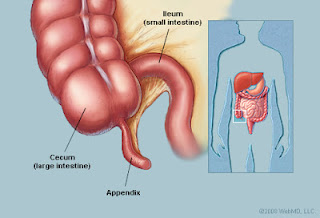
The appendix is a small blind-ended tubular structure attached to the large intestine close to where it joins the small intestine. It has no digestive function and is commonly assumed to a vestigial organ left behind from a plant-eating ancestor.
Evolutionists have postulated that in the past, man had a larger cecum, but as man progressed from a higher-fiber diet to a lower-fiber diet, the larger cecum became less necessary. Thus the appendix is said to have resulted from a loss of cecal size.
appendix3.jpg

- The appendix is now known to be an important part of what is called the reticulo-enadothelial system of the body. Like the tonsils, the appendix fights infection.
There are collections of lymphocytes (body defence cells) in its lining.
The appendix is part of a system that determines which microbes are allowed to live in the intestines and which ones are not. The large intestine needs to have a healthy population of harmless bacteria living on its inner surface.
Babies are not born with these microbes. Babies develop in a germ-free environment in their mother’s womb so during infancy and childhood the immune system has to learn which microbes can live on the body surfaces and which cannot. Even the good microbes need to be kept in their place and your immune system helps keep them there throughout your life.

- When the large bowel becomes inflamed and its population of good bacteria is lost due to outpouring fluid that is part of the inflammatory response to injury and infection, the appendix acts as a “safe house” for good bacteria, which can then repopulate the large bowel when the inflammation is over. For more information on this function see article in Science Daily, 8 Oct 2007.

- One study done by Dr. Howard R. Bierman on hundreds of patients with leukemia, Hodgkin’s disease, cancer of the colon, and cancer of the ovaries showed that 84% of these patients had their appendix removed, while in a healthy control group only 25% had it removed. [Bergman and Howe, p. 45] This is a positive correlation, indicating a possible role of the appendix in preventing these diseases.

- Your Appendix Could Save Your Life

Maybe it's time to correct the textbooks,” said researcher William Parker, an immunologist at Duke University Medical Center in Durham, NC “Many biology texts today still refer to the appendix as a 'vestigial organ.”

The Coccyx:

Another organ declared useless by evolutionists is the coccygeal vertebrae (the coccyx). This is the bottom of your spine.The fact that the coccyx is made of several segments fused together is no indication that it used to be a mobile tail. 
image026.jpg
The segmented structure allows it to grow during foetal development and childhood.   Scientists have found that important muscles attach to those bones. The pelvic floor muscles and ligaments help with maintaining upright stance and walking, and support the internal organs of pelvic cavity.

http://www.laserspin...natomy/tailbone
http://education.yah...ects/subject/24
http://education.yah...cts/subject/213
http://www.angelfire...s/tailbone.html

Plica semilunaris of conjunctiva

The plica semilunaris is a small fold of bulbar conjunctiva on the medial canthus of the eye.
surface_anatomy_of_eye_(wiki)13174524922
It functions during movement of the eye, to help maintain tear drainage via the lacrimal lake, and to permit greater rotation of the globe, for without the plica the conjunctiva would attach directly to the eyeball, restricting movement.
"Four fornices are formed by the conjunctiva where it is reflected from the eyelids to the globe. The superior fornix is the largest in both size and volume. It is formed and maintained by fine smooth muscle slips that pass from the levator palpebral superioris muscle and insert into the conjunctiva. This attachment prevents the conjunctiva from folding downward over the cornea. It also prevents the fornix from developing sags as the globe moves upward, which might obstruct vision. The temporal fornix is attached by fine fibrous slips to the tendon of the lateral rectus muscle, again maintaining the relative position of the fornix during horizontal movements of the globe. The inferior fornix is attached to the tendon of the inferior rectus, which prevents its movement. The plica semilunaris performs the same function as a fornix medially, and is a reversed fornix with the fold of conjunctiva lying externally (Fig. 3). During a medial gaze, the fornix has a variable depth. This occurs because the fibrous slips that link the conjunctiva to the tendon of the medial rectus muscle insert onto the deep surface of the plica and caruncle. Contraction of the medial rectus tightens these slips, forming a cul-de-sac medially as the globe adducts. On maximal medial rotation, the plica partially unfolds to form a true fornix similar to that present in other areas. (Fig. 3). During a medial gaze, the fornix has a variable depth. This occurs because the fibrous slips that link the conjunctiva to the tendon of the medial rectus muscle insert onto the deep
surface of the plica and caruncle. Contraction of the medial rectus tightens these slips, forming a cul-de-sac medially as the globe adducts. On maximal medial rotation, the plica partially unfolds to form a true fornix similar to that present in other areas."(Dartt, Darlene A. (2006). "The Conjunctiva—Structure and Function". Duane's Foundations of Clinical Ophthalmology 2. Philadelphia: Lippincott Williams & Wilkins. Chapter 2)
http://www.oculist.n.../v8/v8c002.html

The relationship between the plica semilunaris and caruncle and the bulbar conjunctiva, eyelids, and lacrimal puncta is important in several ways. Any change in these structures due to scarring or other fibrous changes could mechanically limit rotation of the globe. In addition, keratinization, hypertrophy, or retraction of the caruncle may interfere with mucus and foreign body excretion, resulting in dysfunction of the lacrimal drainage system.

N.B:
Darwinists say it's is the vestigial non-functional remnant of the the "third eyelid"(nictitating membrane) which is drawn across the eye for protection in some animals e.g:camels, sharks & birds.
bald-eagle-nictitating-membrane-closeup.

Wisdom teeth:

First of all, a tooth, just like any other molar tooths has an obvious function, namely to grind food. We have 32 teeth, including these wisodm teeth. Of course we could still grind food without our 4 wisdom teeth. We could probably also be able to grind food with 26, 24 or with 20 teeth. Be that as it may, the wisdom teeth are obviously not vestigal. It has also been suggested, that earlier generations of humans which ate food that was allot rougher, and didn't have the same protection and care wore down their teeth a lot faster, therefor, a new set of teeth, at the age of 20 to 25 was very practical for them.
Opposition to Prophylactic Removal of Third Molars (Wisdom Teeth)
http://www.apha.org/...ult.htm?id=1371

The Vomeronasal (Jacobson’s) Organ
human.gif


The adult human VNO displays species-specific, gender-dimorphic and highly stereospecific responses to ligands. The organ's local response, or electrovomerogram, is followed by gender-specific behavioral changes, modulation of autonomic nervous system function, or the release of gonadotropins from the pituitary gland. Functional brain imaging studies revealed consistent activation of the hypothalamus, amygdala and cingulate gyrus-related structures during adult human VNO stimulation. These findings present new information supportive of a functional vomeronasal system in adult humans.
http://www.ncbi.nlm..../pubmed/9929629

These data demonstrate the existence of a functional vomeronasal-pituitary pathway in adult humans. In addition to the effect on gonadotropin pulsatility, the vomeropherin also produces concurrent reflex autonomic effects after VNO stimulation. These included decreased respiratory frequency, increased cardiac frequency, and event-related changes of electrodermal activity and EEG pattern. Therefore, this investigation also provides evidence for functional connections between the VNO and a variety of hypothalamic areas in adult humans.
http://www.ncbi.nlm..../pubmed/8836161

Recent progress in the neurobiology of the vomeronasal organ.
http://www.ncbi.nlm....pubmed/12203701

The researchers believe that the cells in the VNO send electrical impulses to the hypothalamus which stimulates the pituitary gland to release or stop releasing certain hormones (Lawton 1997).
http://www.macaleste...attraction.html


Erector pili:

Piloerection refers to a reaction of the sympathetic nervous system that causes hair follicles to protrude outwards from the skin. Commonly called goosebumps or gooseflesh, it is a physiological response to cold air and intense emotions, especially fear. It is most common to see goosebumps on the forearms, though they can also appear on the legs, buttocks, chest, and neck on some people.
Another medical term for piloerection is cutis anserina. Goosebumps appear when the sympathetic nervous system causes the arrectores pilorum muscles under the skin to contract.

Goosebumps may help to conserve heat when you're exposed to cold. They may do this in several ways:
  • As with larger muscles, contraction of the muscles in the skin (called "arrectores pilorum") makes heat.
  • The raised hair follicles cause skin pores to close.
  • Hairs standing up trap a layer of air near the skin, holding onto body heat.
They also have an important role in keeping the skin’s oil glands unblocked.
http://books.google....ctor pili human
Arrector-Pili-Muscle.jpg
Quantitative pilomotor axon reflex test: a novel test:The quantitative pilomotor axon reflex test (QPART) may complement other measures of cutaneous autonomic nerve fiber function.
http://www.ncbi.nlm....pubmed/22868966

Relation to diseases:
Though rare, goosebumps can be a sign of a seizure disorder (called temporal lobe epilepsy), a disorder of the sympathetic nervous system, or a brain tumor. They are also common during heroin or other opiate withdrawal. In fact, the term "quitting cold turkey" refers to the presence of goose bumps (that mimic cold turkey flesh) during withdrawal from heroin. (The term could also have come from the expression, "talk turkey," meaning to speak bluntly or directly, without preparation.)
 http://www.intelihea...d=dmtHMSContent

Goose bumps may be a kind of "skin orgasm"
http://www.healthgui...oose-Bumps.html
N.B:
Cat's body, for example, initiates piloerection to make the hairs on the back and tail stand on end. This process makes the cat appear larger than it actually is.
Piloerection is also beneficial for animals when they are exposed to extremely cold weather. Goosebumps extend the hairs on a cold animal, creating a thicker coat that offers more protection. Erected hairs provide extra insulation as they trap heat more effectively than a fur coat in its normal state.
Because piloerction in man doesn't make predators think twice before attacking & its role in heat regulation is less that animals, Darwinists declared it a useless leftover from our imaginary animal ancestors.
-----------------------
Related: Why Mammal Body Hair Is an Evolutionary Enigma
http://faculty.washi...r/receptor.html
http://www.keratin.com/aa/aa031.shtml
http://jap.physiolog...6/2/256.extract
http://www.scientifi...ile-sl-11-12-13

Plantaris

In monkeys it is connected to the toes and is useful in swinging from branches.

25C.jpg
(Image: Plantaris in cat's leg)

In human beings it is tiny and may be absent (7–20% of population)(Simpson SL, Hertzog MS, Barja RH. The plantaris tendon graft: an ultrasound study. J Hand Surg [Am] 1991;16:708–711)


In humans, Plantaris aids to:
  • plantarflex the ankle joint
  • flex the knee joint
It has been considered to be an organ of proprioceptive function for the larger, more powerful plantarflexors as it contains a high density of muscle spindles.(Moore KL, Dalley AF, editors. Clinically Oriented Anatomy. 5. Philadelphia: Lippincott Williams & Wilkins; 2006. pp. 648–649)
Its motor function is minimal but its long tendon can readily be harvested for plastic reconstruction elsewhere with little functional deficit.
Palmaris Longus:

It's a flexor of the wrist and tenses the palmar aponeurosis & It's great candidate for plastic reconstruction.
5336palmarislongus.jpg
"loss of this tendon results in no major abnormality of hand function. But Mc Grouther (1996) states that the main function of palmaris longus is to anchor the skin and fascia of hand and hence to prevent degloving of palmar skin from horizontal shearing forces. Therefore, variations in the innervation of such a clinically important muscle should be of interest both to the academicians and clinicians"

Basilosaurus

Basilosaurus

untitled.png
Basilosaurus is thought to be lived between 40 million years ago in Eocene.
The fossils were initially believed to be reptile, hence the suffix -"saurus", Greek for ‘king lizard,’, but later found to be a marine mammal.
 “Basilosaurus existed at a time when baleen-bearing mysticetes [modern baleen whales] are known to have existed, and echolocating odontocetes [toothed whales] are presumed to have existed,” whale evolution expert Dr. Lawrence Barnes of the Natural History Museum of Los Angeles, quoted in Evolution: The Grand Experiment by Dr. Carl Werner, page 144. New Leaf Press, 2007


Size compared to a human.


There is unparalleled degree of elongation compared with modern whales. The Basilosaurus is 18 meters (60 feet) long (10 times as long as Ambulocetus) with 0.6 meter (2 ft) hind limbs. They were probably used to clasping during copulation.
Gingerich said,
It seems to me that they could only have been some kind of sexual and reproductive clasper.’ Gingerich, P. D., B. H. Smith, and E. L. Simons. 1990. Hind limbs of Eocene Basilosaurus isis: evidence of feet in whales. Science, 249: 154-157

Barbara Stahl, a vertebrate paleontologist and evolutionist, points out:
"The serpentine form of the body and the peculiar shape of the cheek teeth make it plain that these archaeocetes [like Basilosaurus] could not possibly have been the ancestor of modern whales."

The jawbone of an ancient whale found in Antarctica may be the oldest fully aquatic whale yet discovered.

10/11/2011
This jawbone, in contrast, belongs to the Basilosauridae group of fully aquatic whales, said Reguero, who leads research for the Argentine
Antarctic Institute.With this new fossil find, however, dating to 49 million years ago (bear in mind that Pakicetus lived around 53 million years ago), this means that the first fully aquatic whales now date to around the time when the alleged walking whales (Ambulocetus) first appear.

www.nbcnews.com/id/44867222/ns/technology_and_science-science/

Rodhocetus

Rodhocetus
 rhodocetus.jpg
A fossil of a creature called Rodhocetus, mammal that lived in the sea and now extinct, is portrayed as the first creature with legs changing into flippers and with the tail developing into a whale’s tail. Without it there is really no story, but recent disclosures undo the tale.
Two species were identified ( Rhodocetus kasrani in 1978 by paleontologist Gingerich. Rhodocetus balochensis by Philip Gingerich in 2001.
The date set for the Rhodocetus is about 49 - 39 million years ago, in the middle Eocene
Basilosaurus_tail.jpg
Dr Gingerich, who found the fossil, promoted the idea that Rodhocetus had a whale’s tail.
Carl Werner noted that the part that would show the presence of the flukes (the rear wings) is missing. He asked about the missing tail bones and how they knew it had tail flukes. Dr Gingerich replied,
"I speculated that it might have had a fluke, I now doubt that Rodhocetus would have had a fluked tail."
200px-532px-Rodhocetus_sp_pelvis_hind_li
magnify-clip.png
Pelvis, hind limb, and the vertebrae Rodhocetus sp. on Field Museum of Natural History.

    Dr Werner noted on inspecting the fossil of Rodhocetus the absence of any flipper bones. When he asked Dr Gingerich how he knew that the animal had flippers, Dr Gingerich said,
    “Since then we have found the forelimbs, the hands, and the front arms of Rodhocetus, and we understand that it doesn’t have the kind of arms that can spread out like flippers on a whale.

Ambulocetus natans

Ambulocetus natans
It lived about 50 million years ago, during the early Eocene.The specimen was found in eastern Pakistan by Thewissen et al,(Northeastern Ohio University College of Medicine), who popularized the idea that this creature was an early, amphibious ancestor of whales. It is actually a land creature that evolutionists have insisted on ‘turning into a whale.’
ambulocetus.png

The name Ambulocetus natans comes from the Latin words ‘ambulare’ (to walk), ‘cetus’ (whale) and ‘natans’ (swimming), and means ‘a walking and swimming whale.’
It is obvious the animal used to walk because it had four legs, like all other mammals, and even wide claws on its feet and hooves on its hind legs.  Apart from evolutionists’ prejudice however, there is absolutely no basis for the claim that it swam in water, or that it lived on land and in water (like an amphibian).
In order to see the border between science and wishful imagination on this subject, let us have a look at National Geographic’s reconstruction of Ambulocetus.  This is how it is portrayed in the magazine:
ng_whales0104.jpg

Fake drawings:  Imaginary webs added to claws, and rear legs made to look like fins.
If you look at it carefully you can easily see the two little visual manipulations that have been employed to ‘turn the land-dwelling Ambulocetus into a whale:
  • The animal’s rear legs are shown not with feet that would help it to walk, but as fins that would assist it to swim.  However, Carroll, who examines the animal’s leg bones, says that it possessed the ability to move powerfully on land.[5]
  • In order to present an impression of adaptation for water, webbing has been drawn on its front feet.  Yet it is impossible to draw any such conclusion from a study of Ambulocetus fossils.  In the fossil record it is next to impossible to find soft tissues such as these.  So reconstructions based on features beyond those of the
    skeleton are always speculative.  That offers evolutionists a wide-ranging empty space of speculation to use their propaganda tools.
With the same kind of evolutionists touching up that has been applied to the Ambulocetus drawing, it is possible to make any animal look like any other.  You could even take a monkey skeleton, draw fins on its back and webbing between its fingers and present it as the ‘primate ancestor of whales.’

In publishing the picture of the animal’s skeleton, National Geographic had to take a step back from the retouching it had carried out to the reconstruction picture which made it seem more like a whale.  As the skeleton clearly shows, the animal’s feet were designed to carry it on land.  There was no sign of the imaginary webs.

whale5a.jpg


(A) Imaginary drawing of Ambulocetus, ‘at the end of the power stroke during swimming’, by Thewissen et al.

(B) The stippled bones were all that were found. And the bones coloured red were found 5 m above the rest. With the ‘additions’ removed there really isn’t much left of Ambulocetus!
The evolutionary biologist Annalisa Berta commented on the Ambulocetus fossil (in 1994):

'Since the pelvic girdle is not preserved, there is no direct evidence in Ambulocetus
for a connection between the hind limbs and the axial skeleton. This hinders interpretations
of locomotion in this animal
, since many of the muscles that support and move the hindlimb originate on the pelvis
'

220px-Ambulocetus_SIZE.png
Imaginary drawing-Ambulocetus size, compared to a human.
In 1996, More remains were found:

The shock:
1776Ambulocetus-natans.jpg

Figure : All the material found of Ambulocetus natans (from: http://www.neomed.ed...gins/index.html)- The ONLY known fossil in the world - This animal is known solely from a single, partial skeleton, that of an individual about 3 meters (~10 feet) long!

EUGENE M. MCCARTHY, PHD commented:

The actual evidence for such a claim is actually rather meager. Here are the few points usually cited in support of this assertion:

 
  • It is supposedly whalelike because it had a nose that allowed it to swallow underwater.
  1. However, human beings and many other non-marine organisms can swallow underwater.
  2. Moreover, as can be seen figure above , the snout of the single known specimen was not preserved.
  • The periotic bone, which surrounds the inner ear in mammals, is
    supposedly whalelike, allowing ambulocetids to hear well in water.
  1. But no one actually knows how well these creatures could hear, whether in water or out of it.
  2. Moreover, little or nothing is usually said about the great dissimilarity between all of the other features of this animal and those of a whale.
  • Its teeth are alleged to be like those of a whale.
  1. But the jaws of the single individual known (again see the figure above) are highly fragmented, and the few teeth preserved appear to differentiated, unlike those of toothed whales.
  • It is asserted that Ambulocetus's hindlimbs were ill-adapted to terrestrial locomotion. But the limbs — and the pelvis — are so poorly preserved (see high resolution image), that it seems there is no clear evidence bearing on this point.
  • Known fossils are from the Eocene and are already quite whalelike. Ambulocetus
    (Thewissen and Aria 1994; Thewissen et al. 1996) cannot be counted as a transitional form because it is actually younger than the oldest rcognized cetacean Himalayacetus (Bajpa and Gingerich 1998). The evolution of whales from forms that are younger than the earliest known whales clearly isn't possible.
www.macroevolution.net/ambulocetus.html

The jawbone of an ancient whale found in Antarctica may be the oldest fully aquatic whale yet discovered.
10/11/2011
With this new fossil find, however, dating to 49 million years ago (bear in mind that Pakicetus lived around 53 million years ago), this means that the first fully aquatic whales now date to around the time when walking whales (Ambulocetus) first appear.
www.nbcnews.com/id/44867222/ns/technology_and_science-science/

N.B:

Wikipedia is unreliable source for any information related to evolution.


Related topics:

Basilosaurus

Rodhocetus

Pakicetus

Indohyus

Pakicetus

Pakicetus
A Quadrupedal Forced to be the ‘Ancestor of the Whale’
pakicetus.png

In 1983.  P. D. Gingerich and his assistants, who found the fossil, had no hesitation in immediately claiming that it was a ‘primitive whale,’ even though they actually only found a skull.
Its skeleton turned out to be similar to that of common wolves.  It was found in a region full of iron ore, and containing fossils of such terrestrial creatures as snails, tortoises or crocodiles.  In other words, it was part of a land stratum, not an aquatic one.
So, why was a quadrupedal land dweller announced to be a ‘primitive whale’? 
'Subtle clues in combination—the arrangement of cups on the molar teeth, a folding in a bone of the middle ear, and the positioning of the ear bones within the skull—are absent in other land mammals but a signature of later Eocene whales.'
In other words, based on some details in its teeth and ear bones, some persons felt able to describe this quadrupedal, wolf-like land dweller as a ‘walking whale.’  Just one look at the reconstruction of Pakicetus by the evolutionist illustrator will reveal the absurdity in terming it a ‘walking whale.’

Even Gingerich himself admitted:
'But we do know that its hearing mechanism was that of a land mammal and that it was found in fluvial sediments with other land animals'
Distortions in The Reconstructions :
ng_whales0101.jpg

ng_whales0102.jpg


(Paleontologists believe that Pakicetus was a quadrupedal mammal.  The skeletal structure on the left, published in the Nature magazine clearly demonstrates this.  Thus the drawing of Pakicetus by Carl Buell, which was based on that structure, is somewhat realistic.)

ng_whales0103.jpg(Pakicetus reconstruction by National Geographic  
The animal has been portrayed in a ‘swimming’ position.  Its hind legs are shown stretching out backwards, and an impression of ‘fins’ has been given.)
pakicetus.gif
Top left: Gingerich’s first reconstruction
Bottom left: what he had actually found
Top right: more complete skeleton (remaines claimed to be found later)
Bottom right: more reasonable reconstruction

'illustration shows the skulls of two pakicetids (Ichthyolestes and Pakicetus) are comparable to that of a modern coyote (Canis latrans). Saying that the evolution of whales started with this doglike animal is sheer nonsense' (EUGENE M. MCCARTHY, PHD on evolution of whales)
The features of the details are no compelling evidence on which to base a link between Pakicetus and the whale:
  •  some of these features are actually found in other terrestrial animals as well.
  • None of the features in question are any evidence of an evolutionary relationship.  Even evolutionists admit that most of the theoretical relationships built on the basis of anatomical similarities between animals are completely untrustworthy.
    Quote
    If the marsupial Tasmanian wolf and the common placental wolf had both been extinct for a long time, then it is no doubt that evolutionists would picture them in the same taxon and define them as very close relatives.  However, we know that these two different animals, although strikingly similar in their anatomy, are very far from each other in the supposed evolutionary  tree of life.  (In fact their similarity indicates common design—not common descent.)
    The mole has a bird-like sternum and wrist bones, but it would be absurd to conclude that birds evolved from moles! Many more examples can be found here: Similarities and Homology: No Evidence For Evolution!
Pakicetus, was a unique species harboring different features in its body.
In fact, Carroll, an authority on vertebrate paleontology, describes the Mesonychid family, of which Pakicetus should be a member, as “exhibiting an odd combination of characters.”[3]
As paleontologist Robert L. Carroll (1997: 329) notes,

'It is not possible to identify a sequence of mesonychids leading directly to whales, although some teeth now recognized as belonging to primitive whales were originally described as from mesonychids. All adequately known mesonychids were terrestrial in most aspects of the skeleton, and some show specializations for cursorial [i.e., running] locomotion.'
Such prominent evolutionists as Gould accept that ‘mosaic creatures’ of this type cannot be considered as transitional forms.

 In his article ‘The Overselling of Whale Evolution,’ Ashby L. Camp wrote:

 “The reason evolutionists are confident that mesonychids gave rise to archaeocetes, despite the inability to identify any species in the actual lineage, is that known mesonychids and archaeocetes have some similarities.  These similarities, however, are not sufficient to make the case for ancestry, especially in light of the vast differences.  The subjective nature of such comparisons is evident from the fact so many groups of mammals and even reptiles have been suggested as ancestral to whales.”[4]

G.A. Mchedlidze, a Russian expert on whales, has expressed serious doubts as to whether creatures like Pakicetus and Ambulocetus, and others—even if accepted as aquatic mammals—can properly be considered ancestors of modern whales. He sees them instead as 'a completely isolated group.'
‘All the postcranial bones indicate that pakicetids were land mammals, and … indicate that the animals were runners, with only their feet touching the ground.’ This is very different from Gingerich’s picture of an aquatic animal! But the evolutionary bias is still clear, describing Pakicetus as a ‘terrestrial cetacean’ and saying, ‘The first whales were fully terrestrial, and were even efficient runners.’ But the term ‘whale’ becomes meaningless if it can describe land mammals, and it provides no insight into how true marine whales supposedly evolved.
http://harunyahya.com/en/works/3378
5-whale evolution

Summary:
http://youtu.be/2nS-RifoPFA?t=9s

Indohyus

Indohyus
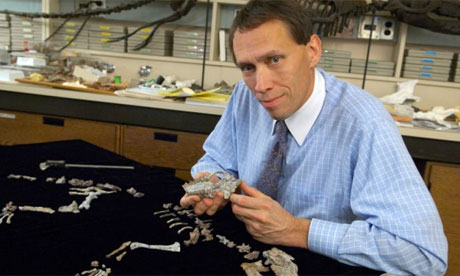
A report published December, 2007, outlined a description of a new fossil discovery claimed by Dr. J. Thewissen and his colleagues to represent the ancestor of the whale/cetaceans. This went viral.

whales_wiki.png
indohyus.png
dn13110-1_250.jpg(Imaginary drawings)

220px-Indohyus_BW.jpg

The reason why evolutionists cling to Indohyus as a missing link is that:
1- they depict a structure between the middle and inner ear (tympanic bullae, involucrum  extra "wall") as similar to that in marine mammals.
2- they claim that Indohyus' teeth have a similar structure to those of marine mammals
3- eyes being higher in the skull than is the case in other ungulates,and  this is a feature shared with whales. 


(Magnified, actual bones in the link below:
http://static.guim.c...-indohyus-1.jpg
However, the idea of the evolution of the whale, a fantastical and unscientific fairy tale, is incompatible with the emergence of Indohyus. Let us now examine these inconsistencies.

a) Indohyus is a finding that rocks the idea of whale evolution, and the idea that it supports it is a total deception.
According to the classic scenario of whale evolution, mammals dwelling on the land are considered to have moved into the water. The fact is, however, that an examination of Indohyus shows that it already lived in water (teeth 18O values and osteosclerotic bones- Virtually all aquatic vertebrates have it ), and its dental structure shows that it lived a herbivorous existence. This feature of Indohyus represents a major contradiction of those evolutionists who say, in their classical accounts, that terrestrial mammals moved into the sea in order to find prey.
The New Scientist article said this on the subject:

 The research also challenges the idea that cetaceans – the order that includes whales, dolphins, and porpoises – split from their land-dwelling forebears and returned to the water to hunt aquatic prey.

This suggests that Indohyus was a shallow water wader already, and had not returned to the water simply to hunt live prey.
Whenever they are confronted by findings that clash with their own fairy tales they attempt to save their theories by means of such trickery as saying “evolution happened in this way, rather than that,” when what they should say is; “our accounts are wrong, there is no foundation to what we have been describing as the true facts in school text books.”

b) The similarities constructed between Indohyus and whales are not restricted to these life forms alone.
The similarities they have come up with between the two can also be seen in other mammals which have no connection at all to whales in respect of the theory of evolution. Scientists make the following admission on the subject:

None of these features characterize all modern and extinct cetaceans [whales—KB].... In addition, all of these characters are found in some mammals unrelated to cetaceans(Thewissen, et al., 2007)

As we have seen, Indohyus shares anatomical features not just with whales, but also with other mammals which are totally incompatible with whales in terms of the myth of evolution. For that reason, the depiction of Indohyus as “the missing link in whale evolution” in New Scientist magazine is devoid of any scientific justification.

indohyus_f.jpg
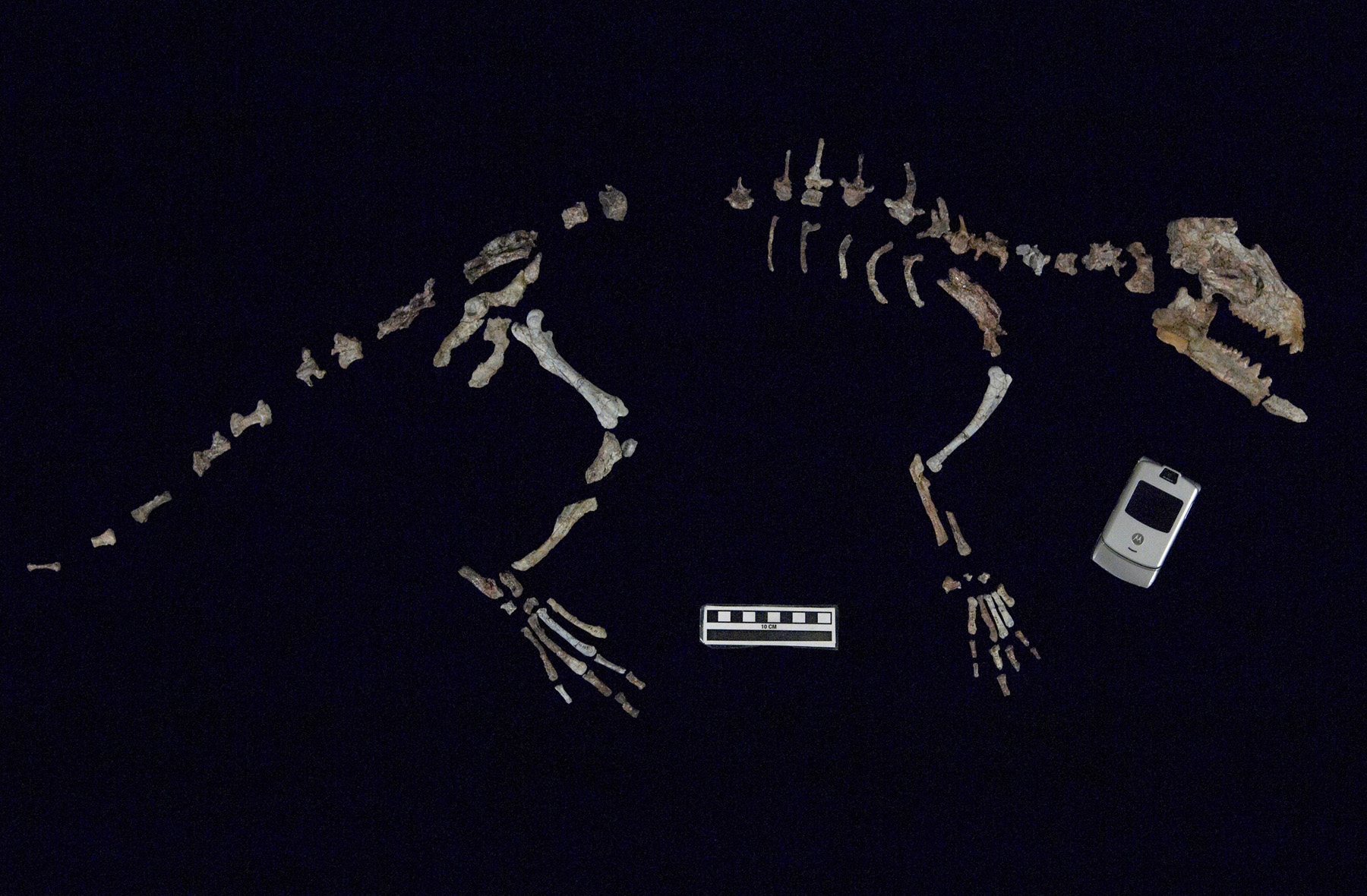
'The 48-million-year-old actual skeleton of Indohyus spent much of its life in water.
The cell phone is for size comparison .
'


Quote
What does Indohyus actually prove? It proves that the alleged closest relative of the whale can change from the hippopotamus to a small deer-like creature in the blink of an eye, based on certain similar structures that it has in common with other mammals besides whales.
The DNA of whales is most like the DNA of hippos. Therefore, the molecular biologists say whales must have evolved from an early hippopotamus.
Paleontologists don’t buy that argument because they think the oldest whale fossils are 50 million years old, and the oldest hippo fossils are just 15 million years old. If whales preceded hippos by 35 million years, they could not have evolved from them. But the fossil record has “not resolved the issue of cetacean relations” either. So, there are several different proposed whale ancestors.

c) The similarity constructed between Indohyus and whales on the basis of dental structure is also questionable

Those making these claims about Indohyus also suggest that it shares a common dental structure with whales. However, whales are carnivores. Indohyus, on the other hand, was a herbivore, with totally different feeding patterns.
F4C3A0DD-DE25-9608-7616C4B09B24DA94_1.jp
http://www.scientifi...09B24DA94_1.jpg
They said
"All fossil and recent cetaceans differ from most other mammals in the reduction of crushing basins on their teeth: there are no trigonid and talonid basins in the lower molars, and the trigon basin of the upper molars is very small (for example in pakicetids and ambulocetids) or absent. Crushing basins are large in raoellids -indohyus- and other basal ungulates. This implies that a major change in dental function occurred at the origin of cetaceans, probably related to dietary change at the origin"(Thewissen, et al., Nature)

What they are basically saying is that Indohyus must have been a whale ancestor because its teeth are NOT whale-like, which is proof that the shape of whale teeth evolved!

Additionally, ScienceNOW, a daily news feature of the journal Science, notes that "cetaceans are so different from any other creature that researchers haven’t been able to agree which fossil relatives best represent their nearest ancestors."
Conclusion:

Since evolutionists adopt their theories as a dogma right from the outset, and since evolutionary development is a belief imposed by materialist ideology, they are quite capable of manufacturing huge flights of fancy based on the very smallest similarities. The way they regard Indohyus, an animal that lived in rivers and no larger than a racoon (compared to the small swimming mouse deer), as the ancestor of the whales, on the basis of superficial similarities, such as Indohyus' eye sockets being located a little higher, represents a striking and dazzling example of this dogmatic and fantastical mindset. 


Any normal, rational individual whose thought processes are unfettered by materialist preconceptions will know that this design can only be possible as the result of a mind having planned it. In the same way that the existence of a computer points to the existence of a computer engineer, or a building to that of an architect, so the sublime complexity and vast quantities of information in the biological systems in living things indicate the existence of the Creator who brought them into being. It is quite certain that this Creator is Almighty God, Who has no need of blueprints or designs in order to create, and Who brings all things into existence merely by commanding them to “Be!”
http://www.darwinism...akale_id=148106
http://www.ridgenet....sage/v12i4n.htm